Start here
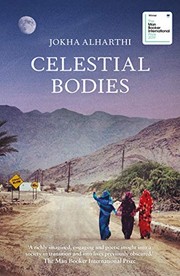
Celestial Bodies
Jokha Alharthi
Novel, 2010. Translated from Arabic
Follows three sisters in the village of al-Awafi, tracing Oman's shift from slavery and tribal society to oil-era modernity.
Two books that put you in Oman. One, Celestial Bodies, is by a writer from Oman and set there. The other is a wider pick, by someone who knows the place well.
Oman's best-known book abroad is Celestial Bodies by Jokha Alharthi, which in 2019 became the first Arabic-language winner of the International Booker Prize. Most writing from Oman is in Arabic, and very little of it has been translated into English, so many English-language books about the country are by visitors: journalists, historians and explorers. Celestial Bodies is the place to start, tracing three sisters in the village of al-Awafi as Oman shifts from slavery and tribal society to oil-era modernity.
Jan Morris's Sultan in Oman is a vivid account of a 1950s journey through Muscat, the interior and Dhofar, just before modern Oman emerged. John Townsend's Oman: The Making of a Modern State explains how the coast, interior, tribes and the Dhofar rebellion shaped the country's move from isolation to a modern state.
“Find a copy” goes to Bookshop.org. If you buy, we earn a small commission and independent bookshops get a share too.
Follows three sisters in the village of al-Awafi, tracing Oman's shift from slavery and tribal society to oil-era modernity.
By long-time residents and outsiders who know the place well, or folk tales, poetry and history with a strong feel for Oman.

Bedu life and desert travel across the Empty Quarter, including Omani Dhofar and the interior in the 1940s.
Afghanistan Armenia Azerbaijan Bahrain Bangladesh Bhutan Brunei Cambodia China Georgia India Indonesia Iran Iraq Israel Japan Jordan Kazakhstan Kuwait Kyrgyzstan Laos Lebanon Malaysia Maldives Mongolia Myanmar Nepal North Korea Pakistan Palestine Philippines Qatar Saudi Arabia Singapore South Korea Sri Lanka Syria Taiwan Tajikistan Thailand Timor-Leste Turkey Turkmenistan United Arab Emirates Uzbekistan Vietnam Yemen